
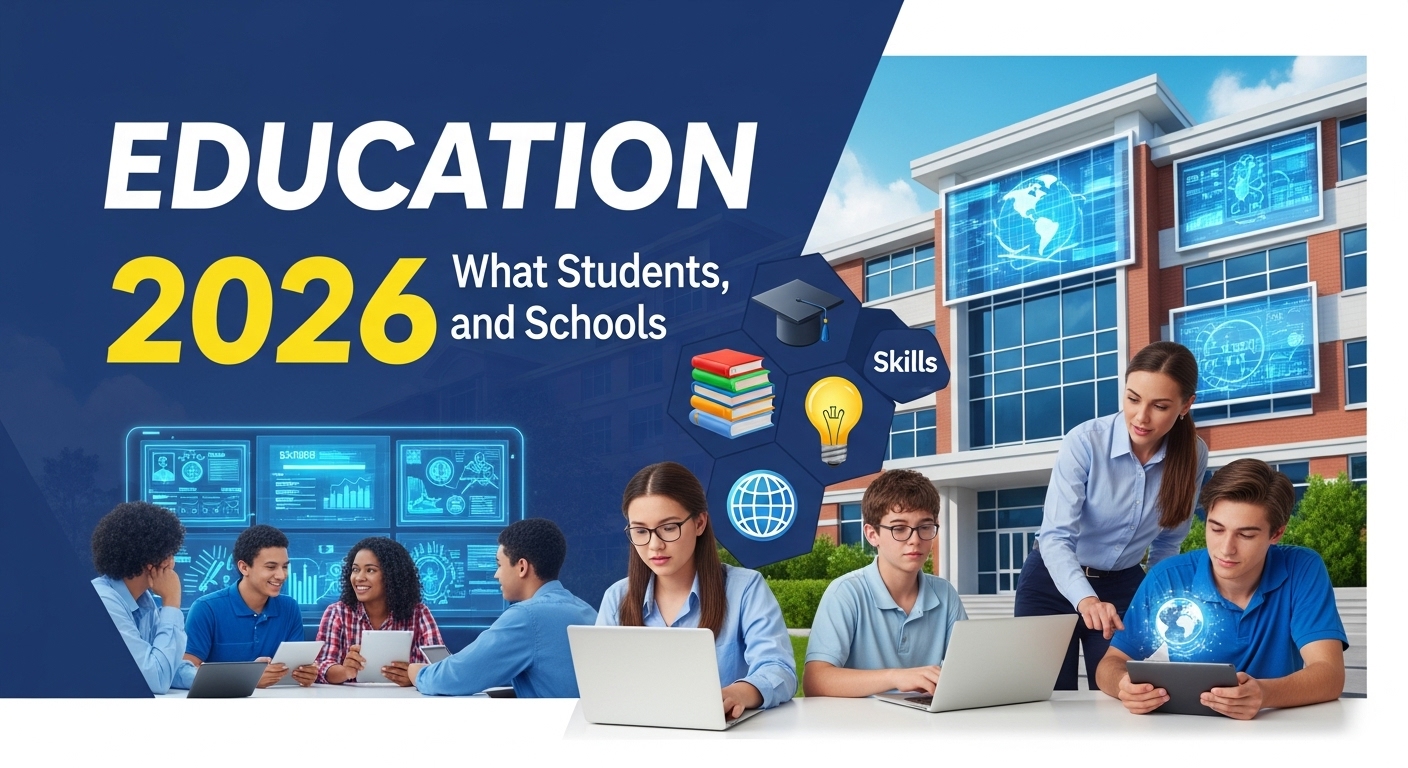
Across the world, education systems are under pressure to change. Students are confused, parents are worried, and employers complain that graduates lack practical skills. The primary issue is that traditional education has not kept pace with the demands of modern economics and technology. Education 2026 trends are designed to solve this issue by introducing new policies, smart technology, and global education reforms that prepare learners for the future.
The solution lies in understanding these trends early. Education 2026 focuses on policy-driven reforms, digital transformation, and international standards that help students become competitive, skilled, and adaptable in a rapidly changing world.
Education 2026 Trends: Why Education Policies Are Changing
Governments are realizing that outdated education policies are harming economic growth and employment.
Reasons Behind New Education Policies
- Rising youth unemployment
- Mismatch between degrees and job skills
- Global competition in education and the workforce
- Rapid technological innovation
Education 2026 policies aim to align education with real-world needs rather than outdated academic models.
New Education Policies Under Education 2026
Education 2026 introduces learner-focused and flexible policies.
Major Policy Reforms Expected by 2026
- Skill-based curriculum frameworks
- Flexible subject choices for students
- Credit-based learning systems
- Recognition of online and vocational education
These policies give students more control over their learning paths.
Technology as a Core Pillar of Education 2026
Technology is no longer optional—it is the foundation of Education 2026.
Key Technology Trends in Education 2026
- Artificial Intelligence for personalized learning
- Digital classrooms and smart boards
- Online exams and assessments
- Learning analytics to track student progress
For Pakistani students, this means access to global-quality education through laptops and smartphones.
Global Reforms Influencing Education 2026
Education 2026 is shaped by international best practices.
Global Education Reform Highlights
- Focus on STEM and digital skills
- Collaboration with international universities
- Global certification standards
- Emphasis on lifelong learning
These reforms help students compete not only locally but also internationally.
Education 2026 Trends: Impact on Students and Careers
Education 2026 directly improves employability.
Career-Focused Benefits
- Early exposure to industry skills
- Freelancing and remote work readiness
- Strong foundation for entrepreneurship
- Reduced dependency on traditional degrees
Students gain practical value, not just certificates.
Education 2026 Policy and Technology Comparison Table
| Area | Old Education Model | Education 2026 Trends |
|---|---|---|
| Policies | Rigid curriculum | Flexible & skill-based |
| Learning Mode | Classroom-focused | Hybrid & digital |
| Technology | Limited | AI & smart tools |
| Assessment | Exam-based | Continuous evaluation |
| Career Focus | Degree-oriented | Skill & job-oriented |
Challenges in Adopting Education 2026 Trends
Despite progress, challenges remain.
Common Issues
- Unequal access to technology
- Lack of teacher training
- Policy implementation delays
Practical Solutions
- Government-backed digital initiatives
- Teacher upskilling programs
- Public-private education partnerships
How Students Can Benefit From Education 2026 Trends
Students who act early will benefit the most.
Practical Advice for Students
- Enroll in skill-based online courses
- Build digital portfolios
- Improve communication and tech skills
- Stay updated with policy changes
These steps align perfectly with Education 2026 goals.
Frequently Asked Questions (FAQs)
1. What are the main Education 2026 trends?
They include new policies, digital learning, AI integration, and global education reforms.
2. How do Education 2026 policies help students?
They provide flexibility, skill development, and career-focused learning paths.
3. Is technology compulsory in Education 2026?
Yes, technology is a core component, not an optional add-on.
4. Are global reforms relevant for Pakistani students?
Absolutely. Global reforms open international study and work opportunities.
5. How can students prepare for Education 2026 trends?
By developing digital skills, adaptability, and continuous learning habits.
Conclusion: Education 2026 Trends Are Redefining Learning
Education 2026 trends represent a powerful shift toward modern, flexible, and career-driven education. New policies, technology integration, and global reforms are reshaping how students learn and succeed. Those who understand and adapt to these trends early will lead the future workforce.